Cornhole Bag Filling: Corn vs Resin and What Buyers Should Check
Cornhole bags can contain natural corn or synthetic pellets, but the fill name alone does not tell you how a finished bag will play, survive storage or fit an order. Start with the intended use, then specify the filler, shell, finished weight and number of bags. This guide separates material choices from performance claims and gives wholesale buyers a practical sample and quotation checklist.
What are cornhole bags filled with?
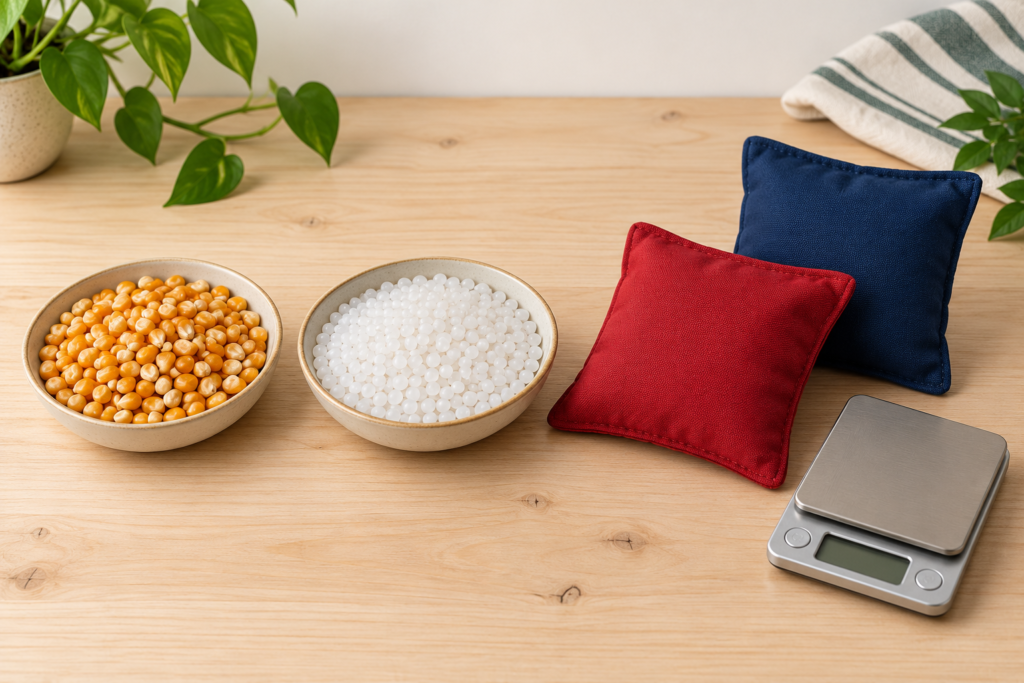
Cornhole bag filling usually means either natural corn or manufactured plastic pellets, while the finished shell is a separate specification. The American Cornhole Association describes traditional corn-filled bags and synthetic resin-filled alternatives in its equipment guidance. Waffle Games buyers should therefore ask for the actual filler description rather than assume every product called a bean bag contains beans. A useful order identifies natural or synthetic fill, the fabric on each face, the finished bag weight and the supplied quantity. Those details answer different questions: material identity, surface behavior, handling and order completeness. Start with the sales channel as well. A recreational game assortment and equipment intended for a named competition may need different documentation. The comparison below is a selection aid, not a claim that one material automatically makes every bag faster, waterproof or approved for tournament use. Retain the approved sample as the physical reference.
| Filling description | What the name tells you | What to ask before buying |
|---|---|---|
| Natural corn | An agricultural kernel filling | Storage instructions, finished weight and suitability for the intended environment |
| Resin or plastic pellets | A manufactured synthetic filling | Material identity, pellet form, finished weight and care instructions |
| Synthetic corn | A commercial description; it does not identify every formulation | Exact material, whether the offer is loose filler or finished bags, and an approved sample |
The ACA bag-selection guide distinguishes the storage concerns of natural corn from plastic-filled alternatives. That distinction does not replace testing of a particular shell and seam. Treat the complete bag as the purchased product.
Is synthetic corn the same as resin filling?
Synthetic corn is a product description, not a universal material specification, so buyers should not treat the phrase as a guarantee of identical pellets. GoSports, for example, identifies polypropylene in its own synthetic-corn filler listing; that statement describes that named product, not every supplier’s formulation. Waffle Games uses a synthetic-corn product name for a finished-bag listing, which is a different purchasing format from a sack of loose filler. Before comparing quotations, write down which format is required and ask the supplier to identify the material supplied. Pellet appearance, material name and finished-bag behavior are separate checks. Two offers can use similar marketing words while including different shells or quantities. A buyer ordering replacement throwing bags should not receive filler alone, and a manufacturer buying raw material should not compare a finished retail set price with a filler price. Clarify the unit before discussing cost.
Use the Synthetic Corn Filled Bags product page to identify the finished-bag format, then request a quotation for the selected configuration. For terminology only, the GoSports synthetic-corn listing is an example of a brand naming its own filler material. It does not establish the composition of Waffle Games bags.
How much should a finished cornhole bag weigh?
A finished cornhole bag should be specified against the rules or recreational program it will actually serve, rather than a general claim of regulation quality. The American Cornhole League publishes a six-inch square nominal bag size and a weight range of 15.5 to 16.5 ounces in its equipment rules, alongside further requirements. ACL competition also requires bags from its approved list, so matching a dimension or weight alone does not establish approval. Waffle Games buyers can use those published numbers as a reference when preparing a brief, while checking the current rules for the intended event. For any sample, weigh the complete sewn bag, including its fabric and stitching. A filler-only weight is a different measurement and cannot be substituted without accounting for the shell. Record the scale units, sample identification and measured result so a later shipment can be compared with the same specification.
| Check | Reference or method | Important boundary |
|---|---|---|
| ACL nominal size | 6 × 6 inches; published tolerance ±¼ inch | Check all current event requirements and approved-list status |
| ACL finished weight | 15.5–16.5 oz, approximately 439–468 g | The gram range is a rounded unit conversion |
| Order inspection | Measure and weigh the finished sample | Agree the acceptance method and quantity checked |
See the ACL equipment rules for the complete requirements. For the board side of a matched set, use the separate cornhole board dimensions guide; bag measurements and board measurements should remain distinct in the purchase specification.
What should buyers check in a filled-bag sample?
A useful cornhole bag sample check examines the completed product, not just the advertised filler. Waffle Games buyers should compare the approved material description with the shell, stitching, weight, color grouping and package contents received. The American Cornhole League’s equipment rules also make bag damage and leaking resin relevant to competition, reinforcing why an intact seam matters independently of the material name. For a wholesale program, the buyer and supplier should agree which observations are visual checks and which require a defined measurement. Keep the sample label, photographs and written results together. A short throwing comparison can help a buyer describe a preference, but it does not produce a universal speed rating. Use the same board, surface condition and handling routine when comparing alternatives, and avoid claiming that an informal demonstration proves long-term durability, chemical compliance or event approval. Those conclusions require their own evidence.
- Identify the sample. Record the product code, fill description and fabric on each face. Label alternatives clearly so the approved option cannot be confused with an earlier sample.
- Check the complete bag. Measure size, weigh each sampled bag and inspect stitching and corners. Photograph any opening, loose seam or visible loss of fill.
- Count the sellable unit. Confirm the bags per set, colors per group and sets per carton. Keep any carry bag or retail insert separate in the component list.
- Sign off the specification. Save the accepted sample and written requirements together before approving production. A logo preview approves artwork placement, not the hidden fill or finished weight.
Does resin filling make the whole bag waterproof?
A synthetic filler does not by itself establish a waterproof claim for the complete cornhole bag. The American Cornhole Association explains that natural corn needs dry storage and can deteriorate when exposed to moisture; its synthetic-fill discussion concerns avoiding those corn-related problems. Waffle Games buyers still need care instructions appropriate to the selected fabric, seams, printing and filler. Ask what the supplier means by all-weather, whether a stated claim covers the finished bag, and what evidence supports that scope. Recreational use on a damp lawn, repeated washing and permanent outdoor storage are different conditions. A product description should not merge them into a single promise. For a rental or retail program, include storage instructions with the handover material and remove visibly damaged bags from use. Treat cleaning advice for one brand or competition program as specific guidance, rather than copying it onto every cotton or synthetic bag.
As a practical purchasing check, ask for written cleaning and drying instructions before approving packaging artwork. If only the filler has a documented property, describe that property accurately instead of extending it to the shell. Keep bags dry before enclosed storage and follow the supplier’s instructions for the actual configuration; do not invent a wash temperature or drying cycle. Review the returned sample again if care instructions change.
How do you specify wholesale cornhole bags clearly?
A clear wholesale cornhole bag request names the finished product, material requirements, quantity unit and intended market before asking for a price. Waffle Games’ standard minimum order is 100 sets; the number of bags in one set must still be stated for the selected configuration. The current standard sample timing is five to seven days after the customer confirms proceeding with sampling. Production is 25 to 40 days, depending on order quantity. These are separate stages, not a delivered-to-door date. A purchasing brief should therefore show the required arrival date independently from manufacturing and identify the destination for the shipping quotation. Include authorized artwork, colors, retail packaging and any required documentation. A buyer who specifies these inputs can compare quotations on the same basis and avoid treating a lower price for fewer bags, a different shell or loose filler as an equivalent offer.
Use a brief like this: “Finished cornhole bags for a recreational retail program; specified synthetic fill; fabric and finished size to the approved sample; stated target weight; stated bags per set and color split; quantity in sets; authorized logo artwork; retail pack and carton requirements; destination and required arrival date.” Replace every general phrase with your actual requirement before approval.
Browse the cornhole bags category to identify the relevant format. Then send a bag specification inquiry with the chosen product and quantities. Standard payment is 30% deposit and 70% against a copy of the bill of lading. Confirm the quotation’s product configuration and shipping scope together; a buying guide is not a substitute for the final order specification.
Cornhole bag filling: buyer questions
The most useful cornhole bag filling questions separate what is inside a bag from what a buyer receives and how the completed product will be used. The American Cornhole Association provides material-selection context, while the American Cornhole League publishes its own competition requirements. Waffle Games buyers should use both kinds of information in the right place: general guidance helps form questions, event rules define eligibility, and the approved product specification defines the order. Neither a synthetic-fill label nor a six-inch size claim establishes every other property. Before approving a purchase, make sure the material description, finished weight, set contents and intended use agree across the sample and quotation. The answers below summarize the decisions covered in this guide. Keep them with the product-specific paperwork, especially when a retail listing, replacement order or promotional bundle uses a different number of bags per set.
Is synthetic corn real corn?
No. Synthetic corn is a commercial description for manufactured filler, not natural corn kernels. Ask for the exact material description for the selected product; the name alone does not identify every formulation.
Does resin filling mean a cornhole bag is waterproof?
No. A filler property does not establish waterproof performance for the finished shell, seams and printing. Request care instructions and evidence covering the complete bag before making that claim.
How many bags should I order for one game?
A conventional two-team game uses eight bags, grouped as four per team. A supplier may sell a set of four or a complete eight-bag bundle, so state bags per set and sets required in the quotation.