Cornhole Board Materials: Plywood, MDF, Frames and Finishes
For a wooden cornhole board, specify the top, frame, legs and finish separately. Birch plywood is a useful starting point for comparing wooden tops, but the name alone does not establish thickness, core construction, weather suitability or playing behavior. MDF is a different panel material, not another name for plywood. Compare the actual construction and an approved finished sample before choosing a wholesale specification.
Plywood, MDF and solid wood: what are you actually buying?
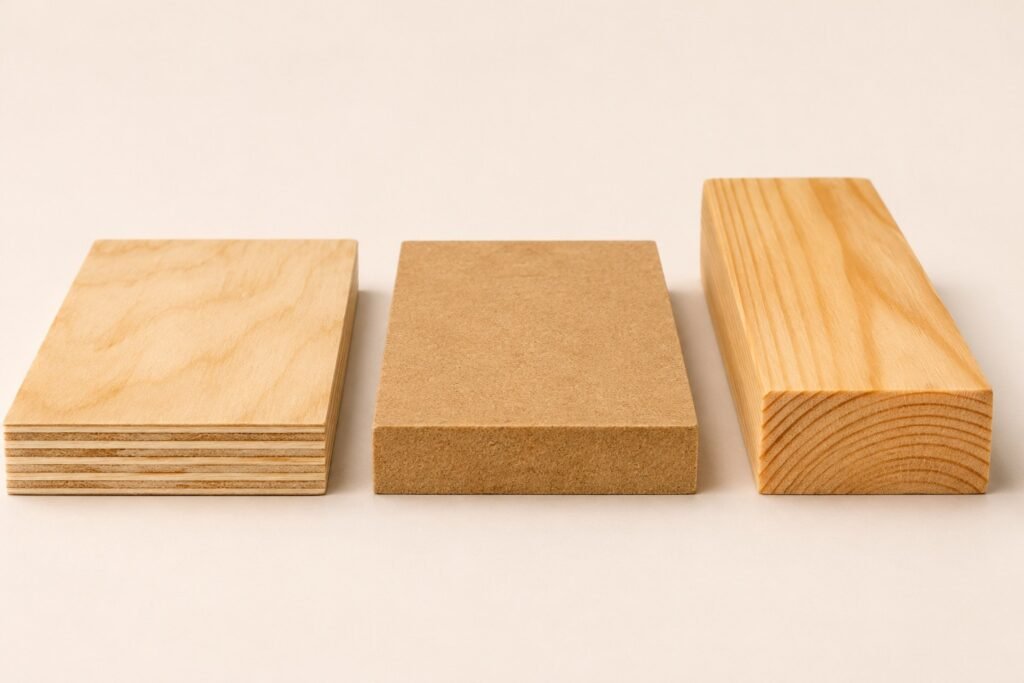
Cornhole board materials should be described by component, because a plywood playing top can sit on a solid-wood frame with a different leg construction. The USDA Forest Products Laboratory distinguishes plywood, made from bonded veneers, from fiberboard products such as medium-density fiberboard, or MDF. Those categories describe different panel constructions. Waffle Games buyers should therefore ask what the top contains, what supports it and how the finished assembly is specified. A birch face description should be accompanied by a clear core description rather than treated as a complete bill of materials. For purchasing comparisons, write the panel type, declared species or construction, measured thickness and finish on separate lines. Then check the sample against those lines. This avoids comparing a finished plywood assembly with an MDF board, an unfinished panel or a photograph that shows only the printed face. Keep the material description attached to the selected product version.
The USDA Wood Handbook, Chapter 11 explains the underlying panel categories. It does not certify a cornhole product or identify the hidden core in a supplier’s photograph. Request a material specification and a representative edge or section view when that distinction matters.
| Material or component | What to identify | Useful buying check |
|---|---|---|
| Plywood top | Veneer and core description, thickness, face quality and adhesive or exposure specification where relevant | Compare the edge, face and written construction. Do not infer an all-birch core from a decorative face alone. |
| MDF top | Fiberboard grade, thickness, edge treatment, finish and intended conditions | Request evidence for the particular grade and use. Do not transfer plywood claims to MDF. |
| Solid-wood frame or legs | Declared wood, actual section, joints, hardware and finish | Inspect the underside and opened legs. A top-only photograph cannot confirm the supporting assembly. |
| Printed or coated surface | Substrate, coating system, artwork method and approved appearance | Approve material and surface together. A print preview does not establish the construction beneath it. |
How should you specify cornhole board top thickness?
Specify cornhole board top thickness as an actual material requirement, with the unit and measurement method stated before comparing quotations. Waffle Games’ classic all-wood board configuration specifies a 12 mm birch plywood top; that figure describes this configuration, not every plywood board or an event approval. A half inch equals 12.7 mm, so a 12 mm panel should not be relabeled as an exact half-inch panel. The USDA Wood Handbook distinguishes panel construction from the properties of a complete assembly. A purchasing decision should likewise consider the support layout and finished sample alongside thickness. If a customer requires a particular competition specification, compare the exact event rules with the exact product rather than relying on a category name. Record whether a measurement includes coating, where the panel was measured and which product revision was checked. Keep nominal trade descriptions separate from measured acceptance values.
Use the cornhole board dimensions guide for overall size and rule-related questions. This material guide addresses the construction choice, not another set of court dimensions.
For a sample review, request agreed measurement locations clear of rounded edges, screw heads or attached trim. Save the readings with the instrument used and the sample identifier. If the quotation and sample differ, resolve the material specification before approving artwork or production. Do not average unlike options into a new thickness that neither supplier actually offered.
Why do the frame, braces and legs need their own specification?
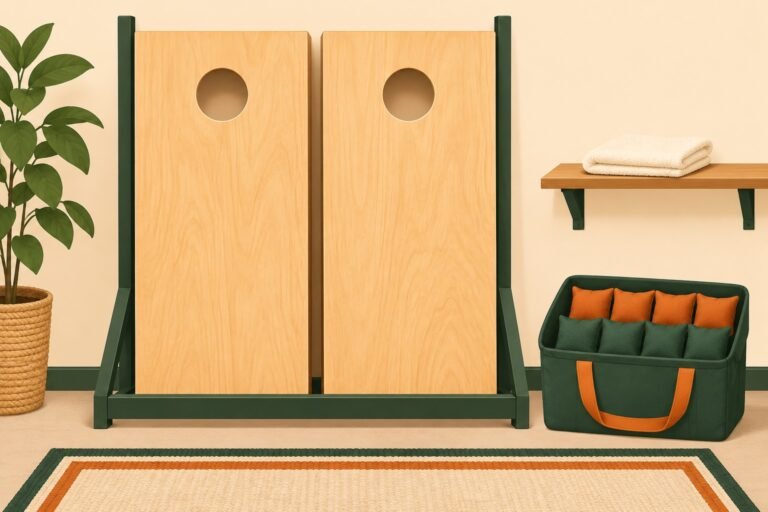
A cornhole board’s frame, braces and legs should be reviewed as a separate assembly rather than inferred from its playing surface. A birch plywood top, a solid-wood rail and a plywood leg are distinct components, even when a photograph makes their color look similar. Waffle Games’ classic all-wood configuration provides a concrete example: the documented construction combines a 12 mm birch plywood top with 20 mm solid-wood frame members and legs, plus two rear support braces. Those details belong to that model and should not be copied onto another version. For any alternative, ask for an underside view, an opened-leg view and a component description that matches the quotation. Check where braces are placed, how the legs connect and whether the hardware interferes with handling or packing. A material comparison becomes useful when the buyer can identify what changes between the offered assemblies.
- Frame: identify the rail material and section, corner joints and attachment to the top.
- Bracing: record the actual brace count and positions. Do not promise a universal reduction in bounce from a brace count alone.
- Legs: check the opened arrangement, hardware access and any agreed locking or storage features. Verify those features on the selected model.
- Service: ask whether the supplied construction permits the replacement work your program expects. An accessible fastener is not, by itself, a spare-parts commitment.
Compare handling with the actual bag and playing setup if feel matters to the buyer. Treat the result as a controlled sample preference, not a published strength rating or a guarantee that every player will experience identical behavior.
Does a coating or plywood label make a board weatherproof?
A clear coat, printed graphic or plywood label does not by itself establish a weatherproof claim for a complete cornhole board. APA–The Engineered Wood Association explains that plywood bond classification concerns the adhesive bond: Exposure 1 is intended for limited moisture exposure, while Exterior addresses longer weather exposure. APA also separates bond classification from resistance to fungal decay. These distinctions help a Waffle Games buyer ask better questions, but they do not establish that a particular board carries either classification. For the offered product, request the actual panel specification, finish description and written care guidance. Review the playing face, hole edge, outside edges, underside and fastener locations as parts of the finished assembly. If outdoor storage, wet handling or cleaning is important, state the conditions explicitly and ask what evidence covers them. Avoid treating an attractive surface photograph as proof of performance in those conditions.
See APA’s plywood guidance and bond classifications for the technical distinction. APA’s construction-panel information is background for asking questions, not a label to apply to an unverified game board.
Ask the supplier to distinguish the approved finish from any optional treatment. Keep storage and cleaning instructions with the retail or rental documentation. Where evidence supports only a limited condition, describe that condition accurately. Do not turn a material name, coating or informal water demonstration into an unrestricted outdoor-use promise.
How can buyers compare material samples fairly?
Compare cornhole material samples against the same written brief and record which variables change between alternatives. Birch plywood, MDF and solid-wood components should be identified before judging the completed board’s appearance or feel. Waffle Games buyers can use a simple comparison record that separates the substrate, support assembly, finish and packaging. Label each sample with its product code and revision, then photograph the face, underside, edges and opened legs. Use the same bags and setup for any informal playing comparison, and record the conditions rather than presenting a preference as a laboratory result. When a supplier changes the panel core, thickness, brace layout or coating, identify the changed item explicitly. An artwork approval should not silently approve a different construction. The objective is a reproducible purchasing decision: someone receiving the next shipment should be able to understand which sample and written requirements defined the accepted version.
- Match identity. Put the sample identifier, product code, material description and revision date on the review record. Keep alternatives distinguishable after they leave the meeting room.
- Inspect each component. Record the top, frame, braces and legs separately. Note visible gaps, rough edges, damaged surfaces or hardware issues for resolution rather than inventing an acceptance tolerance.
- Check the finished surface. Review artwork, color, feel and edges on the actual proposed substrate. A screen mockup does not reproduce the finished surface.
- Record measurements. Use the agreed units and locations. Save the actual observations; leave acceptance limits to the approved specification.
- Review pack-out. Confirm what is in a set, how the board corners are protected and which accessories are included. Do not infer a carrying bag from a lifestyle photograph.
- Close the differences. Resolve open material questions before approval and keep the approved sample available for comparison with the order.
For the classic all-wood example, the documented pack-out is two boards bagged together, with silicone corner guards, then a master carton. That is a model-specific reference, not a packing instruction for every board. Ask for the selected configuration’s actual packing proposal when comparing freight or retail presentation.
What should a wholesale cornhole materials brief include?
A wholesale cornhole materials brief should connect the intended use with the exact construction, finish, quantity unit and approval process. Waffle Games buyers should identify whether the request concerns unfinished boards, finished boards or a complete set with separately listed accessories. Name the top substrate, frame and leg materials, then state actual dimensions and the required surface treatment without mixing in an unrelated model’s details. Include authorized artwork, packaging requirements and the destination for the quotation. The USDA material categories and APA exposure distinctions provide useful vocabulary, while the selected sample defines the offered construction. Keep those roles separate. A supplier can then quote the stated version and identify any proposed substitution. For repeat orders, refer to the accepted specification and sample revision instead of using a broad phrase such as the same quality. This gives purchasing, production and receiving teams a common description to check.
Copyable inquiry outline: “Wooden cornhole boards for [intended use and market]. Top: [panel construction and actual thickness]. Frame and legs: [materials and sections]. Support layout: [agreed drawing or approved sample]. Surface: [unfinished or specified finish and artwork]. Unit: [boards per set and included accessories]. Quantity: [sets]. Packaging: [approved pack-out]. Please identify any substitution and provide the sample and production quotation for this configuration.” Replace the brackets with actual requirements before approval.
Waffle Games’ standard minimum order is 100 sets. Samples take 5–7 days after the customer confirms proceeding with sampling. Production takes 25–40 days, depending on order quantity. These are manufacturing stages, not a delivered arrival date. State the destination and required arrival date separately when requesting shipping information.
Start with the cornhole boards category, compare the relevant construction, then send a material and sample inquiry. Include the product link and your required changes so the discussion starts from an identifiable configuration.
Cornhole board materials: buyer questions
Cornhole board material questions are most useful when the answer identifies the component and the conditions behind a claim. The USDA Forest Products Laboratory describes wood-based panel categories, and APA explains exposure classifications for structural plywood. Neither source certifies a Waffle Games board or replaces a product specification. Buyers should therefore separate general material knowledge from the actual configuration offered for an order. The questions below address three common purchasing shortcuts: treating one species name as a complete construction, assuming that a thickness term proves eligibility, and extending a surface treatment into a weatherproof promise. Review the written description, physical sample and intended use together before signing off. If a buyer changes the substrate or support assembly after a sample review, revisit the relevant checks rather than assuming an earlier approval covers the change. Keep the final answers attached to the selected product and revision.
Is birch plywood always the best cornhole board material?
There is no universal choice based on the species name alone. Identify the plywood construction, actual thickness, supporting frame, finish and intended use. Compare a complete sample against the purchasing requirements rather than treating birch as a guarantee of every performance characteristic.
Is a 12 mm cornhole top the same as a half-inch top?
No. One half inch equals 12.7 mm. A 12 mm top should be specified as 12 mm, not an exact half inch. Check the selected product against the requirements of the intended event or program; a material description alone does not establish competition approval.
Can clear-coated plywood cornhole boards stay outside permanently?
Do not assume permanent outdoor suitability from the clear coat or plywood name. Obtain written guidance and supporting evidence for the complete board, including its panel, edges, frame and hardware, under the intended exposure and storage conditions.
Technical references: USDA Wood Handbook, Chapter 11, 2021; APA plywood guidance. Product example: Waffle Games classic all-wood boards. Sources reviewed November 3, 2026.