
How American Cornhole Helps European Pubs Win Summer Group Bookings
Direct Answer
Cornhole is becoming a practical summer revenue tool for European pubs and camping resorts because it lowers the social barrier for groups, fits naturally into beer gardens, and keeps guests on-site longer. Compared with cards, darts, or indoor table games, cornhole is easier for mixed-age groups, office parties, tourists, and casual drinkers to join without instruction. For operators in the UK and Germany, that means better outdoor space utilization, more group booking appeal, higher drink attachment, and a fresh American-style experience that stands out in a crowded summer leisure market.

Cornhole gives pubs and holiday venues a simple outdoor activity that turns beer garden space into a group-friendly sales area.
Why is summer a problem for pubs and hospitality operators?
Summer is good for footfall, but it also increases competition. In the UK and Germany, pub operators are not only competing with nearby bars. They are also competing with parks, festivals, campsites, lakeside venues, backyard gatherings, and outdoor dining concepts.
The core problem is simple: guests want open-air social time, but many pubs still treat the beer garden as passive seating space. Tables alone do not create interaction. Traditional indoor entertainment such as darts, billiards, or board games often works best for small groups and regulars, not for larger mixed groups making casual summer plans.
For pub owners and resort operators, this creates three commercial issues:
- – outdoor areas generate less revenue per square meter than they could
- – large groups have fewer reasons to pre-book instead of “just dropping by”
- – guests leave earlier when there is no shared activity beyond drinking
Cornhole matters because it solves a social friction problem. It gives groups a reason to gather, rotate players, cheer, and stay engaged without needing a referee, power supply, or long explanation.
For beer gardens, that makes it more than a game. It becomes a low-complexity social catalyst that helps convert outdoor space into a booking asset.
What makes cornhole better than traditional pub games for outdoor revenue?
Cornhole works well in commercial hospitality because it is visible, simple, and inclusive. A guest can understand the format in under a minute: throw bean bags, score points, take turns. That simplicity is important for summer trade, where venues serve walk-ins, tourists, company groups, and mixed-age parties.
Compared with many traditional pub games, cornhole has stronger outdoor economics:
- – It scales to groups. One set can attract players plus spectators, which helps with larger bookings.
- – It suits beer gardens. It performs best outdoors on lawn, patio, gravel, or terrace spaces.
- – It supports drink sales. Guests remain near tables and bar service instead of disappearing into a separate activity zone.
- – It feels new in Europe. The American association gives it novelty value without being difficult to adopt.
- – It is low-maintenance. No electronics, minimal moving parts, and easy daily setup.
For camping resorts and holiday parks, the same logic applies. Cornhole gives families, adult groups, and event guests a lightweight activity that does not require full animation staff.
Commercially, that means one product can serve multiple uses: casual guest entertainment, weekend events, brewery activations, team-building, and private hire packages.
Cornhole vs traditional beer garden entertainment
For operators choosing between outdoor entertainment formats, the key question is not only fun. It is booking value, space efficiency, and operational simplicity.
- – Board/card games — Best for: small seated groups | Group appeal: low to medium | Outdoor fit: limited | Setup effort: low | Revenue impact potential: low to medium
- – Darts — Best for: regulars, small groups | Group appeal: medium | Outdoor fit: weak outdoors | Setup effort: medium | Revenue impact potential: medium
- – Pool/table football — Best for: indoor use | Group appeal: medium | Outdoor fit: weak outdoors | Setup effort: high | Revenue impact potential: medium
- – Live music — Best for: peak events | Group appeal: high | Outdoor fit: good | Setup effort: high | Revenue impact potential: high but event-based
- – Cornhole — Best for: mixed groups, casual parties, events | Group appeal: high | Outdoor fit: excellent | Setup effort: low | Revenue impact potential: high and repeatable
Cornhole stands out because it combines three factors rarely found together: high visibility, low learning curve, and strong compatibility with drinking-led social occasions. It is easier to integrate than staged entertainment and more group-oriented than tabletop games.
How does cornhole improve beer garden ROI and group booking appeal?
Cornhole improves beer garden ROI by making underused outdoor space more active and more bookable. The business case is not based on charging for the game alone. It is based on increasing dwell time, group size attractiveness, and attached food-and-drink spend.
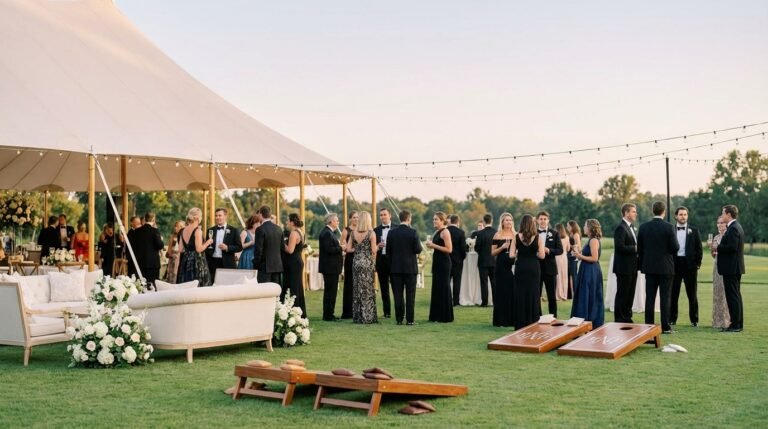
A typical beer garden challenge is dead space between tables, lawn edges, or side areas that are too open for extra seating but too empty to create atmosphere. Cornhole can convert those zones into visible engagement points.
This helps operators in several ways:
- – Higher dwell time: groups stay for “one more round” while waiting for turns
- – Stronger pre-booking value: offices, birthdays, brewery tours, and stag/hen groups prefer venues with an activity included
- – Better social media visibility: the game is photogenic and easy to understand in short-form video
- – Flexible upsell packaging: “2 boards + reserved garden area + drinks package” is easier to sell than tables alone
For German biergartens and British craft beer pubs, cornhole also matches the current demand for relaxed, non-intimidating group entertainment. It does not require athletic ability, special clothing, or prior experience.
That makes it commercially useful for both premium and casual venues trying to stand out during summer.
What should buyers look for before ordering cornhole sets for commercial use?
Hospitality buyers should not treat cornhole as a generic consumer game. Commercial use requires better durability, cleaner presentation, and logistics that fit repeat service.
Key buying criteria include:
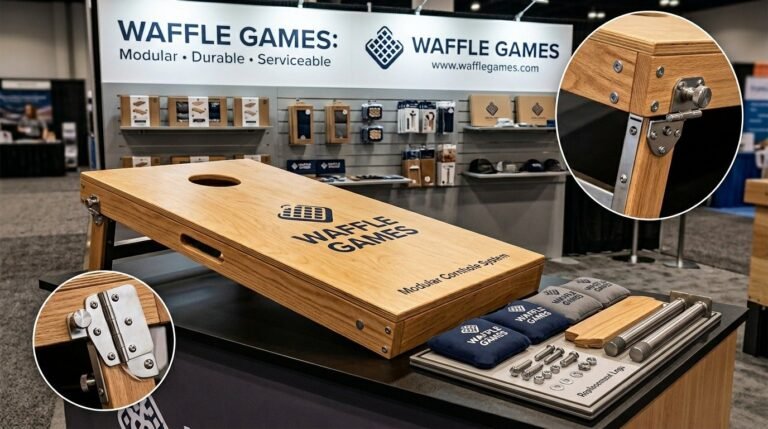
- – Board material: solid wood or reinforced construction for stability and longer replacement cycles
- – Surface finish: weather-resistant coating helps with pub garden and resort use
- – Bag quality: double-stitched bags and consistent fill improve lifespan
- – Branding options: custom logo print or UV graphics support brewery and venue identity
- – Storage and transport: easy stacking matters for seasonal setups and event hire
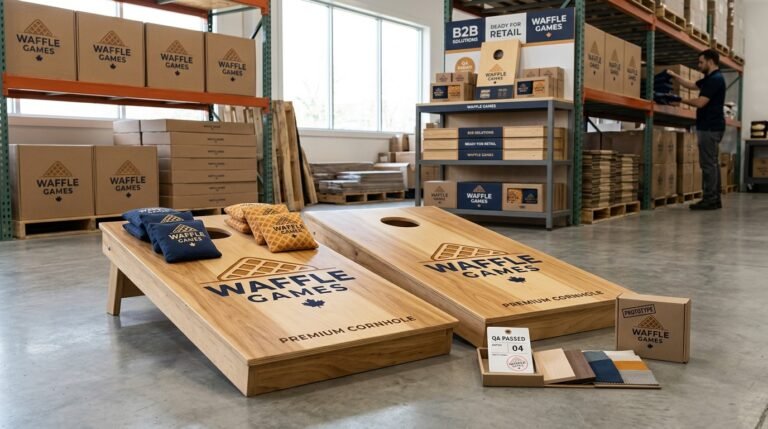
- – Packaging: wholesale cartons should reduce freight damage and simplify handling
- – Lead time and MOQ: important for pre-summer ordering windows
- – Compliance and documentation: ask suppliers about material safety, labeling, and export packaging standards for Europe
For distributors and multi-site buyers, standardization is also important. Matching board dimensions, print quality, and replacement bag availability reduce operational friction later.
A well-selected set should survive repeated guest use while still looking premium enough for hospitality environments.
Best use cases for pubs, breweries, and camping resorts
Cornhole works best where operators need a social trigger, not a complex attraction. It is especially effective in venues that already have outdoor seating but need a stronger reason for guests to choose them over other summer options.
Strong commercial use cases include:
- – Craft beer pubs: add novelty to beer gardens and improve group booking conversion
- – Brewery taprooms: support tours, tasting events, and branded outdoor activations
- – Camping resorts: provide low-staff entertainment for families and adult leisure groups
- – Holiday parks: activate lawn areas near bars, food courts, or event tents
- – Corporate summer events: simple enough for mixed departments and international teams
- – Festival-side hospitality zones: easy to deploy, visible, and sponsor-friendly
For UK and German buyers, cornhole is particularly valuable because it feels both imported and accessible. It carries American leisure culture appeal, but it does not demand rule-heavy onboarding.
That gives operators a rare combination: a fresh attraction that guests can use immediately. In hospitality terms, that shortens the gap between installation and actual spend impact.
Buyer Checklist
- – Confirm the set is designed for repeated public use, not only home use
- – Check board material, finish, and bag stitching quality
- – Ask about custom branding, logo placement, and print durability
- – Review MOQ, lead time, and peak-season production capacity
- – Verify export packaging and damage-control measures
- – Plan storage space and daily setup workflow
- – Match quantity to venue use: casual play, events, or multi-zone deployment
- – Consider replacement bags and after-sales support before ordering
FAQ
1. Is cornhole suitable for European pubs, or is it still too unfamiliar?
Yes, cornhole is suitable for European pubs because its rules are instantly understandable. Its novelty is actually a commercial advantage: guests see something fresh, but they can start playing without staff explanation or prior experience.
2. Does cornhole really help increase drink sales?
Yes, cornhole can support higher drink sales by increasing dwell time and keeping groups in the beer garden longer. It works especially well when paired with reserved tables, pitcher offers, tasting flights, or summer group packages.
3. Why is cornhole better than board games for group bookings?
Cornhole is better for group bookings because more people can participate or watch at once. Board games usually keep one small table occupied, while cornhole creates a shared focal point for larger parties and mixed social groups.
4. How much space does a commercial cornhole setup need?
Cornhole needs a moderate but manageable footprint. Most venues should allow enough space for two boards, player standing room, and safe guest circulation, making it ideal for lawn edges, patios, terraces, and open beer garden lanes.
5. Is cornhole practical for camping resorts and holiday parks?
Yes, cornhole is very practical for resorts because it is low-maintenance and suitable for different age groups. It can be used near bars, communal lawns, event spaces, or rental zones without requiring full-time activity staff.
6. What features matter most for wholesale or multi-site purchasing?
The most important features are durability, branding consistency, packaging quality, and reliable lead times. Multi-site buyers should also check replacement bag supply, standardized sizing, and whether the supplier can support repeat orders efficiently.
7. Can pubs charge directly for cornhole play?
Yes, pubs can charge for cornhole, but bundled use is often more effective. Many operators get better results by including it in group bookings, event packages, or minimum-spend garden reservations rather than charging per game only.
8. When should buyers place orders before summer season?
Buyers should order before peak spring demand whenever possible. Earlier ordering improves production scheduling, branding options, freight planning, and launch timing for summer promotions, especially for customized hospitality sets.
A practical next step for summer planning
If your venue needs a simple way to make outdoor space work harder, cornhole is worth evaluating as a revenue tool, not just a game. It offers a clear fit for beer gardens, brewery taprooms, and resort lawns where group energy drives spend. If you are planning branded sets, seasonal stock, or wholesale supply for hospitality use, now is the right time to compare specifications and ordering timelines.